THE HABITATION PROJECT
This essay is a reflection on what the parts of the modern habitation project actually are - housing, cities, economics, and conservation - and how they might evolve together.
THE HABITATION PROJECT
It seems unbelievable, but the first project of the human species beyond animal survival is somehow still the most pressing challenge of the current age: finding somewhere viable to live.
This essay is a reflection on what the parts of the modern habitation project actually are - housing, cities, economics, and conservation - and how they might evolve together.

Housing Housing itself is somehow in short supply, everywhere in the world. And if in ‘somewhere viable to live’, we include stable access to food, services, employment, society - let’s call this habitation - modern society is doing surprisingly badly. Housing is both short in richer and poorer countries and also in relatively short supply in richer countries where income stagnation leaves people unable to access housing that is available.
And housing is many-sided puzzle. Durability is the next facet. Why don’t houses last long? Why do they fall apart? It makes sense that some goods are made for limited use-lives - clothes, for example. But not houses. Why aren’t houses made to last forever, as they once appeared to be, if everyone is trying to solve a pressing shortage of this most basic need?
Next: Are houses actually good places to be? Do we even know what we are looking for and should expect to find? Is it space? Light? Materials? Colors? Textures? It’s easy to imagine that architecture is easy to imagine: but why architecture is good, in fact even what it is, is hard to describe let alone measure.
And even: economic value. Is there something missing when so much of the economy - almost all private housing - is effectively unproductive?
The central value of residential housing to its owners is in its relative scarcity an asset. And it is true - this is the theory of economic rent - that scarcity is a legitimate source of money. But economic rent is based, firstly, on natural scarcity, such as that of productive agricultural land; and secondly, on relative scarcity, such as that of premium urban land.
This is perverse. To generate artificial scarcity as a way to enable rents is like banning tap water in order to ensure bottled water makers clear a profit. No-one begrudges bottled water as an option; if it was the only choice, society would not accept it. Why not with housing?
Another mystery on housing value: which is why housing is so unproductive in the fullest sense. Both industrial production and natural systems exhibit the characteristic that all parts are somehow consuming and producing or at least facilitating value at the same time. Why is housing not like that?

Cities From a bottom-up perspective, cities are collections of connections: groups, cultures, markets, ideas. From top-down, cities are sets of systems: rules, infrastructures, street grids, services.
How they really work - what’s the best way to interleave the organic and the structured, how to start new ones and how to sustain old ones - is too early to tell, apparently. But now that more than half the human race lives in cities, and metro areas account for 80% of all economic activity, it’s time to work out how to do cities better, and what they can be.
On the basis that cities are the habitation equivalent at group and society scale of housing at the personal and family level, let’s assess them across equivalent factors such as fuel, water, materials, food.
San Francisco is, somehow, despite being a famously mild climate, it is up to 5 times more expensive in terms of energy than Copenhagen. Copenhagen uses so called-district heating, a loop of hot water coming to local electricity generation, to warm buildings. Why doesn’t every city in the world do this (or its inverse, district cooling)? Almost none do. Instead of this, we have so-called energy crises in Europe and around the world.
Similarly, surely by now cities have solved the problem of fresh water and sanitation, two of the first signs of advanced civilizations, which only can occur in (and because of) cities. Definitely not. Tokyo’s water is 10 times cheaper than London’s, despite London’s location right next to a large river. Any and all of the volunteered reasons for this price disparity - aging pipes, business incentives, public governance - are simply glaring examples of the main point: the habitation project is failing. It’s not news that human society needs an endless supply of fresh water and reliable sanitation.
As for materials, cities are not good custodians of the materials endowment that they have been granted. They take in almost all the resources of the planet, and just throw them away: 75% of all materials resources, recycling rates in total of less than 10%. Some materials are re-used on a promising basis, such as steel, but almost all other materials are discarded or re-used in a debased form. The arguments against waste recovery are all either claims of infinite resource availability, obviously not true, or critiques of failing materials management systems. These are fair enough as far as they go, but when you contrast the two materials-sourcing options at the high level, the contrast ought to be clear: is it better to go to mines all across the world, force minerals through wildly elaborate processing systems and supply chains, to secure materials supply; or just treat cities materially as local mines, with all the useful stuff already present, and exploit them accordingly?
Food, too, is deeply strange. Of all the things - more so even than fuel, water, materials - that we know humans need for habitation, it’s food. So why is food such an afterthought in today’s paradigm of cities? Historically, food supply was geographically, economically, and spatially one of the dominant forces in urban development. But now, it’s a marginal proposition, even to the extent that poorer areas of cities can be become ‘food deserts’, where somehow food supply of any sort just stops being readily available. Even on the best of terms, cities and metro areas do not take food supply seriously: food retailers are huge alien conglomerates, the only commercial actors who can manage the tiny margins on food sales; and food supplies are essentially never integrated with the productive land around, even in, the city itself. If cities - conceived always, whether as organic entities or structured institutions, as sources of bounty for their inhabitants - can’t do food, are they truly habitations at all?

Economics Economics is the strangest science. On both levels of what it says it does, and even what it says it is - it should be the primary driver of definitive results in the human habitation project - and yet on both levels, it’s not clear that this is so.
If we take market economics’ claim of what it does, make things cheaper and more available, and assess that against the most practical focus - how societies value land and housing - it seems to fail almost immediately. It’s almost too easy to state the case: we know that humans urgently need more housing, and they need it, unsurprisingly, where the other people and thus jobs and opportunities and culture are. So it should be comically erroneous that one of the main economic reasons why it is disadvantageous to build more housing in valuable areas: because it causes the value of existing houses to decrease.
Unlike food and cars and computers, staples of the modern economy, your food or car or computer does not get less valuable when someone else gets one. But housing is not like this. If you have property in a valuable part of town - and suddenly a lot more housing is constructed, particularly if it is ugly or low-income housing - then your property does become less valued.
So, in the strange way that the economy works, we’re supposed to want more stuff, we’re supposed to get more stuff as the economy grows, the economy is supposed to grow by making more stuff, and when it comes to making more housing to deliver all this - well, yes, but not like that.
How is this even allowed to occur? Why is housing such a brittle and hostile asset? Why isn’t housing value accounted for in more normal ways? There are proposed solutions to this - one of these is Georgist land-tax reform - which span left and right politically.
But the main observation is, again, how far the project of human habitation is not resolved, even in terms of fundamental issues of how to value housing. We want it, we must have it, more of it is something everyone agrees with; we can’t have more of it because that penalizes the people who have it. That would be seen as a preposterous riddle, were it not that it accounts for the actual practical and psychological core of modern human economic affairs: trying to afford somewhere to live.
As for what economics is more holistically, it’s not much harder to frame the problem. All through history, societies around the world had struggled with resource scarcity. The reason economics formed as a discipline was to address this problem. In fact it is formally what it says it is: a method to allocate scarce resources most productively. And history has shown that it has made a huge contribution: poverty has drastically gone down, and material prosperity is wildly improved.
But in the post-war era, large scale issues of waste and toxic pollution, depletion of necessary resources, and nature destruction became a global issue - acid rain, persistent lead pollution, fisheries depletion, loss of soil fertility, species loss, ecosystem collapse. The question should be obvious: if economics, already the most powerful academic discipline in history, was supposed to solve exactly this - scarcity - how come the environmental crisis ever arose in the first place?
The answers to this question are not good. Many economists say that, for the market - the engine of economic prosperity - to work, prices have to be set on things, and if not, then mistakes will occur in ways that the economy literally cannot account for - ‘externalities’, as they are called. Environmentalists respond, this is all very well, but many of the things that need protecting cannot be ‘priced’ because they are not owned, and can’t be owned, in the first place. What is the ‘price’ of climate stability or global nutrient cycling and who pays for it? What is the price of the species lost, and the earth-systems-stabilizing capacity destroyed, when rainforests are cut down?
The most advanced form of study of the natural world, and the form of economics most critical of environmental harm, are framed by the concept of ‘ecology’. And here’s the classic irony. Ecology is more or less the same word as economy, etymologically: the ‘eco’ in each is the ‘household’.
Today after clashes between ecology and economy in the late 20th and early 21st century seemed to be gradually reconciling, the discourse is hostile again.
Some of the global leaders of the economy are openly saying that not only do we not need to worry about impacts on environment and nature, we can be sure the endless economic growth is the only way to ensure that they can be protected, by more efficient and prosperous industrial societies. The most glaring inconsistency here, among many, is that these are the same global leaders - Musk, Bezos - who say we have to get ready to live on other planets, in case we run out of resources or otherwise damage our chances here. So which is it? Can the market truly provide security for our global habitation project or not?
Conversely, leaders of the global environmental movement are saying that limits to resource availability do indeed exist and must be taken into account. Some of them invite a post-growth economic regime, even including degrowth. While economists who say these limits don’t matter or don’t exist have a theoretical problem - not least because economics doesn’t make sense if there isn’t a persistent problem of scarcity to solve - environmentalists aren’t necessarily helping enough to find a solution to the problem of overconsumption.
Claiming economic growth is no longer needed, and offering to forego holidays use of cars and airplanes, is noble, but these are gestures by environmentalists who cannot thrive without the finest fruits of economic growth such as cheap televisions, computers, food, fast rail travel, modern fabrics.
More than this, environmentalists are masters of disincentive - but amateurish at best and dismissive at worst of the role of incentives, and even the human need for change and development.
Being more moral and more parsimonious is the theoretical optimum to win at the project of human habitation - but it is also deeply unengaging for most people, at least directly. So the question becomes how to stimulate progress rather than stagnation, even while keeping the material dimension to a more muted tone: someone has to be excited about something for things to happen that matter. Staying safe is, perversely but truthfully, not the surest path for long term survival.
This stand-off between the two ‘disciplines of the household’ is critical when we consider how much, at the urban scale of habitation, we truly need a guide for how to treat the global environment.

Nature While one strand of human progress has sought to get away from nature, across history and culture, civilized humankind has longed for connection and reconnection to nature in some way. Shamanic, animist, Taoist practices, parts of all religions, and much art and philosophy focuses on the natural world as the context - home, habitation - of human affairs, and a place to which humans and the personal mind should reorient, whether from time to time or in a fuller, ethical sense.
Even though the modern world has done something to diffuse this - gleaming environments, attention-grabbing activities, infinite horizons of new human relations - people still hanker after nature, and the natural. And everyone knows, truthfully, what nature is and what we want to connect to.
It’s not even hard to define. Nature is that which - after all the human hullabaloo is settled, and all interventions have found their limits - exists in ways that exhibit scale, structure, continuity, beauty and some form of flow of value, that do not come from human action or intention.
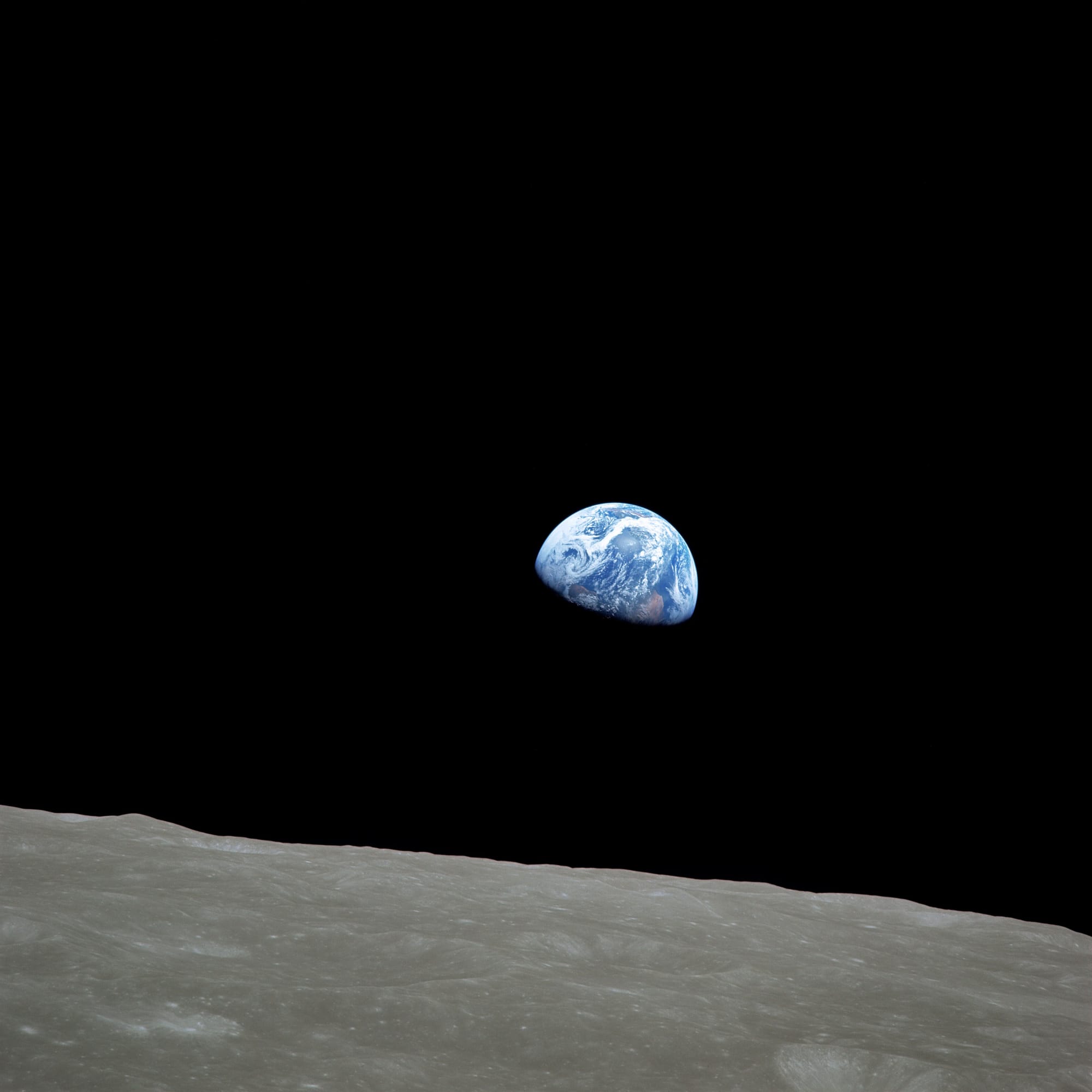
Much of the resistance to going to live on Mars is not the obvious danger of going to and being there; it’s the intuitive sense that we’re leaving too much of nature behind. Human civilization started by discovering the value of soil and water for food cultivation. It’s surely a step back, not a step forward, to want to or to have to go somewhere where you actually have to make soil let alone water, you can’t even find it?
Put more acutely, many of the people who have gotten furthest away from the planet we are on, are the ones telling us that this planet is the one for us, is our habitation, is our home.
And it is this continuity and beneficence that people seek when they want to place something about ‘nature and this planet’ more prominently at the heart of the human habitation project. They want to - intuitively or explicitly - incline away from the presumption that humans can, or should want to, or need to, ‘make everything for themselves’, or escape to another place.
Some of this is practical: about protecting humans from harm, by recognizing the global system and natural world is the source of all of the resources - including mineral and geosystems, not just biota. But some of this is about ethics. And ethics starts simply enough by allowing a sense of intimacy, humility, and connection to underpin the project of human habitation. The human project needs, relies on, can profoundly enjoy, the riches of the habitation context already provided.
Both of these come together under the heading of curiosity. Nuclear power, solar power, biomass power are an example of that . They are all free energy, available to any civilization able to reflect sufficiently on the way the world around them actually is, and to ‘connect to it’ sufficiently to harness that energy on a sustainable basis - efficiency and low-impact are highly allied. Nature integration can be as much science as it is about culture.
Bioregionalism is one attempt to reset the habitation project somewhat to the framing of natural systems, in a way that goes beyond abstractions of protection. This is the practice of placing human activity in the context of a self-defined bioregion - often a watershed or related set of framing geographic phenomena - and taking it as the foundations of the habitation project for that group. What are the natural ways to extract energy, freshwater, food, minerals, biota from the environment - natural in a practical and ethical sense?
But why is this not the default? Why is a sensible framing of nature - in scientific and ethical senses - as the global and regional habitation for the human species not more evident in human affairs? Because it definitely is not. Global preservation of natural systems is not a stable priority. For climate, biodiversity, soil health and nutrient cycling, groundwater, and other life-preserving systems - indicators of decline are unmistakeable. Nature conservation does exist, and is improving, but is not working enough. In the planetary boundaries model of living-systems monitoring, published by the Potsdam Institute, seven out of the nine systems are considered transgressed: climate change, biosphere integrity, land system change, freshwater use, biogeochemical flows, novel entities, and ocean acidification. How does this represent a sensible use of the only planet currently available?

Human progress has been undeniable on every level - technical, cultural, institutional, psychological. People live longer, more people are healthier, societies have more choice and freedom and protection, education is a global priority, cultures are rich and creative, wars are far more scarce.
But somehow - if we assess human progress from the specific lens of ‘do we have somewhere viable to live?’ after all this time and all the efforts of civilization, the answer is shockingly uncertain. We still do not have enough housing; cities are predominantly the habitations for humans and yet are increasingly overwhelmed with challenges; economics and ecology - the twin professions tasked with governing the ‘habitation’ - cannot agree on what works, economics seems to offer only a trap when invited to incentivize the value of housing; and in terms of the natural world at regional and global scale, much of the world wants to protect and preserve the natural system, but most of the world system fails to do so.
When accuracy matters for a costume, it is worth considering how details related to cosplay costume sets will affect the complete look. During a long convention day, reviewing details related to heat resistant cosplay wigs also makes comfort and movement easier to judge. To compare practical details about details related to game cosplay costumes, long cosplay wigs for conventions can help narrow the options for a specific purpose. For an outfit that feels convincing, a balanced view of details related to Halloween styling can support both detail and comfort.
This is not a counsel of despair, this is more despair at the counsel we have given ourselves, and invitation to develop new methods and thought-frames. There must be a better way to pursue the first, and what will necessarily always be the primary, project of human progress and ingenuity, where and how we live.